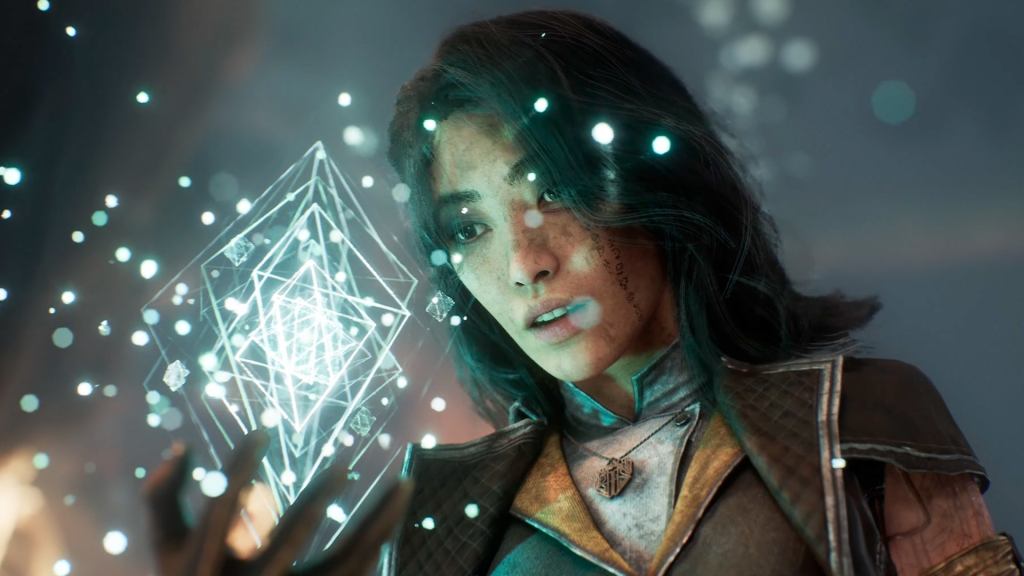
Ever since “Clair Obscur: Expedition 33” came out, I’ve done nothing but sing its praises on my blog. Followers of mine may even be fed up of the endless glazing – I’m a superfan and this is no doubt one of my favourite games of all time.
It’s not all sunshine and roses, however. This was a game made by a small-ish Indie team – their first ever game, no less – and so some of the design choices deserve criticism. I’ve played this game three times now, so some things stick out more than others!
I’m going to talk about eight things I didn’t like about the game, from least to most egregious. In other words, my complaints will get more critical / serious as we go. And be warned – there may be some serious SPOILERS ahead.
Before we begin, you can check out some of my related blog posts below:
Every “Clair Obscur: Expedition 33” Area Ranked
Every “Clair Obscur: Expedition 33” Boss Ranked
Clair Obscur: Expedition 33 – Main Characters Ranked
Top 20 Videogame Performances Of All Time
Nitpicks
I’m probably the only E33 player who took issue with these things.
No “Clear” Metrics / Progress Tracker
The first time I played “Clair Obscur: Expedition 33” I got lost in quite a few places. There’s no mini-map for each area and there’s no pointer telling you where to go to further the story. It’s also very easy to miss an important collectible / power-up, as these are usually well-hidden.
In time I grew to appreciate this design philosophy, however. It meant I had to learn each area inside and out, and therefore I got to experience much more of the well-designed world without rushing through it. I also know that most gamers hate the general hand-holding in, for example, a Ubisoft game.
Me personally? I prefer the guidance. I want to see if there are areas of interest on the map. I don’t like the stress of getting lost or missing something important, wondering if it’s my fault for not paying attention or the developers’ fault for not signposting it well enough.
Another area-related issue I had (especially on replay) is that there’s no in-game tracker for items, nor is there a checkmark on the world map to show you where you’ve been and if you’ve “cleared” an area. Maybe a completion / 100% checklist should’ve been made available once you’ve beaten the game for the first time. I wanted to find all the cool Pictos / Outfits and use them!
Stone Wave Cliffs
As I mentioned when I ranked the game’s areas, I found Stone Wave Cliffs to be a big disappointment on my second and third replays. It’s obviously rough for story reasons (poor Gustave …), but it was the gameplay itself which irked me most.
I’m just not a fan of the shield enemies – and this area is filled to the brim with them. I’m not opposed to the shield mechanic as a whole, as it’s fairly easy to bypass in the mid and late-game, but in Act 1 you’re not well enough equipped to deal with them yet.
In this parry-centric game, I found it super unsatisfying to pull off a parry against an enemy … only for it to knock off one measly shield instead of doing any damage. It kills all the hype of the fights.
On replay the shields become even more aggravating, as there’s no way to breeze through the fights quickly. The other Act 1 areas such as Flying Waters and Ancient Sanctuary can be sped through because the parry timings are easily telegraphed, but here you have to sit through multiple rounds of fighting to knock all the shields off. Each fight takes three times as long as a result.
I probably spent over half of my Act 1 time in this area alone, partly because of its size but also because of the aforementioned shields. That’s probably why I got so fed up of it by the third playthrough.
So, with all that said, do I hate Stone Wave Cliffs? Absolutely not. The enemies themselves are fine if you look past the shields, and the Lampmaster boss at the end is awesome. I’m sure there’s not many E33 fans who thought this area was underwhelming – especially on a first playthrough.
Slight Disappointments
I don’t hate that these are in the game … but they could’ve maybe been streamlined before release.
The Gestral Games
As you travel the overworld you’ll probably come across a variety of “Gestral Games”. These can either be parkour challenges or some sort of short minigame, like a raft battle.
I’m glad the game has side content like this. The story can get very heavy at points so it’s nice to unwind by going to these optional, silly areas … is what I would say if the Gestral Games weren’t all infuriating for one reason or another.
This is not a game engine built around tight movement, so whenever you fall during a parkour challenge you feel as though the game is against you. And don’t get me started on that godforsaken raft minigame! And that cursed climbing wall!
The saving grace is that the reward for beating the Gestral Games is unlocking the swimsuit costumes. So all is forgiven.
You Can Be Too OP By The Final Boss
During my first playthrough, I went straight to Lumiere once it became available (because I was so enthralled by the story and wanted to know how it ended). I was around Level 50 and so all of the fights were fairly challenging. Basically, what I’m saying is that the balance felt right and I was satisfied with how events came to pass.
Most players, however, will instead choose to engage with all of the other Act 3 content once it opens up. There are dozens of places to go and tricky bosses to fight, so if you leave Lumiere until last (like I did on my second and third playthroughs) you end up beating the final boss at around Level 90.
This completely trivializes the final stretch of the story. None of the enemies pose any threat whatsoever, and the party can defeat Renoir in two moves. I bet there were a lot of first-time E33 players who thought Act 3 sucked as a result.
You can manually raise the difficulty in fairness, either by increasing enemy health at Expedition Flags or by purposely equipping a weaker build or party, but how are first-time players supposed to know to do that?
Late-Game Difficulty Spike & Reliance On Maelle
Did I really just complain about how easy the final boss was, only to now complain about how difficult the late-game was? Yes. Yes I did. Let me explain.
You’re expected to be around Level 50 to fight the final boss, but that number varies wildly for the plethora of Act 3 side content. Some areas are fine, but others like Renoir’s Drafts and the Endless Tower are a true test of skill.
A pro and a con of “Clair Obscur: Expedition 33” is that the player has the potential to make an extremely powerful build … which is cool, but that means the developers had to counteract that by making fights ridiculous at the highest levels. Just look at the Simon fight and tell me how a normie is supposed to beat that?!?
I, and I’m sure many other players, had to look up tips and tricks online in order to maximize my builds and have a fighting chance against the superbosses. I honestly don’t think I would’ve ever figured out some of the OP combinations, such as Verso’s “machine gun” build, without the online help.
Also, I have no idea if it’s even possible to beat these Act 3 areas without Maelle. All of the party members are strong but she’s far and away the best character to use thanks to skills like Stendhal, so you’d be a fool to exclude her. It would be nice if a party didn’t have to have a specific character in order to be feasible.
Actual Problems
If there’s ever an E33 sequel, these issues need to be fixed for the next game.
The UI / Lumina Navigation
Now we’ve reached the issues with the game that truly bugged me. I looked past them in the moment because the game was so fun, but they objectively make the game worse and probably stop it from getting a perfect 10/10 score. I’d settle for a reasonable 9.9/10 instead.
I think every E33 fan agrees that the menus and UIs for the Pictos / Lumina were really unintuitive at first. For context, I have a friend who played the game at the same time as me and I had to explain to her how Lumina Points worked – and it took me many hours of gameplay to figure it out in the first place.
I get what the developers were going for. The system of “permanently unlocking” (at a cost) a skill once you’ve won four battles with it was an idea I could get behind, but it took me a while to realise I could even do that in the first place. The Pictos menu is a wall of text as it is, but the Lumina menu is then tucked away to the side and therefore is easily missable.
Both menus are a jumble of words and numbers with no artistic flair. It’s something a sequel should definitely spruce up.
Overworld Traversal
I like that you can use Expedition Flags to fast travel around each area. I have no problems with that, and I appreciated how it made backtracking and completion-ing much easier. So why didn’t they have a fast travel feature like that in the overworld?
It’s not as much of a problem in Acts 1 & 2 as the overworld feels a bit smaller when on-foot, but once Esquie gets the ability to fly the overworld suddenly blooms into this massive land ripe for exploration. Fun at first, a nightmare by the end.
A lot of the late-game overworld traversal involves flying in a straight line on Esquie’s back for minutes at a time. If you break up the Endless Tower into stages rather than marathoning through all thirty-three fights in one go, for example, you’ll have to trek halfway across the overworld just to get back to the fray.
This is a baffling creative decision, one that makes me wonder if I somehow missed a fast travel system. It’s such an odd thing to exclude for an overworld this large.
Linear Game Design
All the other issues on this list I can look past – either because they’re minor gripes or they’re something I learned to ignore – but the one major thing stopping “Clair Obscur: Expedition 33” from being a 10/10 experience is the level design. A lot of reviewers critiqued it at the time and their criticisms are all fair.
Every area in the game looks stunning, and the enemies you fight are all fun, but their linearity is what lets them down. Far too often the goal of an area is to move from point A to B, with a tiny, shallow side path offered here and there to wander down. I could probably count on one hand the side paths which actually led to something varied or meaningful.
This becomes especially egregious when you look at, for example, FromSoftware’s (the “Dark Souls” team) design ideology. Their areas ultimately have a beginning and end point but the traversal and exploration in between are what make them so fun. More often than not, you can venture down a side path and be rewarded with an optional boss or an NPC you otherwise would’ve missed.
If an E33 sequel ever comes, and I’m sure it will, this is the thing I want the developers to knuckle-down on. Give me branching paths with varied content. Give the areas a sense of replayability depending on the fork in the road you choose to go down. Give me exploration where you don’t just have to hold the forwards button!
Aaaand that’s my list! If you liked this post and want to support me, please consider giving me a one-time donation. Even a few pence (or whatever currency you use) is fantastic! I’ve never monetized this blog before, but it would be great if I could do this comfortably and not have to worry about the yearly website domain costs. Thank you so much!
Make a one-time donation
Make a monthly donation
Make a yearly donation
Choose an amount
Or enter a custom amount
Your contribution is appreciated.
Your contribution is appreciated.
Your contribution is appreciated.


I have many complaints about this game, especially about the story and the awful plot twist that comes at the end of Act 2 and ruins all the emotional stakes in the story.
That said, I really don’t understand for final complaint. Yes, each area has a route from the entrance to the exit you need to take, but every single area has side paths that lead to hidden bosses, extra weapons, pictos and hidden doors to the mansion.
The issue is the confusing map designs as you said, but the things you wanted are there, you just need to find them.
LikeLike