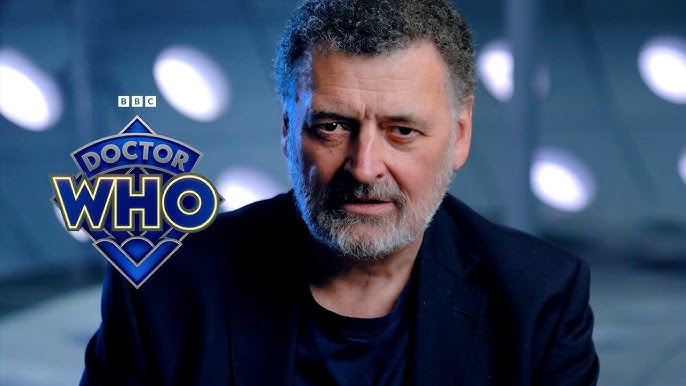
Now that “Doctor Who” has entered another hiatus period, I’ve been looking back on my favourite episodes and eras with a newfound fondness. One of the biggest winners after this whole RTD2 debacle has been Steven Moffat.
I used to think his era (Seasons 5 to 10) was lesser on the whole than RTD’s first era, but in hindsight I think I was far too harsh. I look back on these seasons much more positively now … so with this new, wizened perspective, how would I rank all of the episodes Steven Moffat wrote for the show?
Before we begin, you can check out some of my related blog posts below:
Doctor Who – EVERY Doctor Ranked
EVERY Doctor Who Monster Ranked
EVERY Doctor Who Episode Ranked
“Doctor Who” – Every Season Arc Ranked
Meh
41 – The Doctor, the Widow and the Wardrobe (Xmas 2011)
After sitting through the Chibnall and RTD2 eras, I now find it hard to call some of the worst Season 1-10 episodes “Bad”. There are still a few real stinkers, sure, but I think a lot of them are more forgettable than actively annoying.
The most inconsequential, mundane episode Moffat ever penned (by a country mile, might I add) was his 2011 Christmas special “The Doctor, the Widow and the Wardrobe”. It’s a Narnia-ish parody with some one-note themes of family and love.
At the end of the day, this is a harmless, toothless Christmas episode. It’s not the worst “Doctor Who” episode I’ve ever seen – in fact, I don’t feel any particular way about it. Not bad for Moffat’s worst episode!
40 – The Wedding of River Song (6-13)
I’ve never liked “The Wedding of River Song”. It’s not as bad as the finales we got from Season 11 onwards, but at the time it was a trainwreck and easily the weakest finale up until that point.
It’s a muddied resolution to the Melody Pond / Silence storylines set up earlier in the season, and the timey-whimey-ness got too out of hand. The Tesselecta twist in particular still feels like a cop-out more than a decade later.
Still, it does tie off some loose ends. And there are some good scenes here and there, especially when the Eleventh Doctor chooses to aura farm in a cowboy hat.
39 – The Caretaker (8-6)
I decided to include all of Moffat’s partial writing credits on this list as well. Another writer may have been billed as the “main” writer, but if Moffat’s name was in the writing credits then it qualifies for this ranking.
Gareth Roberts (who did the Shakespeare, Agatha Christie and James Corden episodes) was the main credit for “The Caretaker”, which makes sense. He seems to be comfortable in these low stakes, boring premises.
In all honesty, I have no idea what Moffat contributed to this script. Maybe some of the Doctor-Danny-Clara dialogue? Their hostile dynamic? The kid that then appeared in the next episode, “Kill The Moon”? God knows there’s nothing much else going on in “The Caretaker”, so I’m really struggling to see why this needed two writers.
38 – The Girl Who Died (9-5)
Another partial credit, and another case of Moffat sticking his writing chops where it wasn’t needed.
Jamie Mathieson (the main writer) did “Mummy on the Orient Express” and “Flatline” in Season 8, and would go on to write “Oxygen” in Season 10. All great episodes … which makes it weird that “The Girl Who Died” falls so flat.
If I had to guess, I imagine that Moffat added in the Ishilda / “I know this face!” sub-plots. Is this a case of “too many cooks”? Maybe, but the initial premise of ye olde robots shouldn’t have ended up being this boring.
37 – The Return of Doctor Mysterio (Xmas 2016)
At the time, most Whovians disliked “The Return of Doctor Mysterio”. Nowadays, the general consensus seems to be that it’s underrated. I just think it’s one of the most forgettable Christmas episodes this show has ever aired.
Sure, it’s a lovely, romantic story. And yes, it’s fun how Moffat incorporated the Mexican name for “Doctor Who” in the title. I guess I was just fed up of superhero media in 2016 … and I’m doubly so in 2026.
Okay
36 – Let’s Kill Hitler (6-8)
After a mid-season hiatus, Season 6 returned with a bang when Melody Pond commandeered the TARDIS and forced the trio to go to … 1940’s Germany. To kill Hitler. In a children’s show. Sometimes I think Moffat’s brain needs to be studied.
This is one of the most insane non-finale episodes of NuWho, but not necessarily in a good way. The River Song stuff is fine. The Tesselecta stuff works in a vacuum. Together, it creates a disjointed, unfocused mess.
35 – The Bells of Saint John (7-6)
Another episode which dispelled a mid-season hiatus, except this time “The Bells of Saint John” tells a much more cohesive story. A more boring story, mind you, but at least Moffat didn’t make it overly complicated.
Clara’s introduction is okay but nothing special, and the internet monsters are decent but don’t leave an impression.
34 – Into the Dalek (8-2)
“Into the Dalek” was written by Phil Ford, who penned my favourite “Doctor Who” episode of all time – “The Waters of Mars”. It’s a shame, therefore, that this episode wastes a fantastic premise with boring corridor chases and surface-level ethical debates.
I don’t know what Moffat contributed here, but “The Waters of Mars” was also a co-written episode. Back then, Ford co-wrote it with Russell T. Davies, the showrunner at the time. I guess Ford just prefers co-writing with the showrunners? That’s my theory, anyway.
33 – Hell Bent (9-12)
One of the most controversial episodes Moffat ever wrote. “Hell Bent” had a lot of plot to get through, and in some regards it closed Season 9 in a satisfying way. But it was far from perfect.
There are individual moments here – namely the Hybrid reveal, Clara and Ishilda flying away scot-free, and the Doctor shooting a Time Lord with a gun – which upset me when it first aired. I’ve mellowed on the episode in time, but I still think this deserves to go down as one of the worst pre-Chibnall finales.
32 – The Beast Below (5-2)
Moffat once called “The Beast Below” “One of his biggest regrets”, which I think is harsh. I, for one, think there are nine worse episodes he should regret more.
He eventually backtracked on that comment and said he loved the episode, but I think it threw Amy too far in the deep end for her first real adventure. The Star Whale plot, albeit thought-provoking, is probably too brutal to for a children’s show.
Still, the magic is there if you squint hard enough. The Smilers are one of Moffat’s best visual creations, and the fantastical theme is prevalent early on in Season 5.
31 – The Snowmen (Xmas 2012)
Are we all in agreement that Victorian Clara is the best version of Clara? Or is that a hot take?
As Christmas specials go, “The Snowmen” is fine. The Paternoster
Gang and the Great Intelligence add some interesting dynamics, and this version of Clara bounces off the Eleventh Doctor really well.
I just wish she wasn’t killed off at the end …
30 – Asylum of the Daleks (7-1)
I say this every time “Asylum of the Daleks” is mentioned on one of my rankings, but I have a friend who swears this is one of the greatest NuWho episodes. Evidently, we don’t share the same opinion.
We’re once again introduced to a version of Clara which was slightly better than the one we got, and the Amy-Rory divorce is such a sour plot-line. The Dalek Asylum itself is a cool idea, though, so the premise alone makes this an Okay episode.
29 – Dark Water / Death in Heaven (8-11/12)
I always rank two-parters as one entire “episode” because the quality is normally quite even, but by lumping “Dark Water” and “Death in Heaven” together the average enjoyment of the story comes way down.
The first part, “Dark Water”, is brilliant. The Danny twist is very shocking and sets up some intense stakes, and it’s amazing to see Clara and the Doctor so confrontational. The ending cliff-hanger, with Missy’s indentity reveal and the Cybermen assault, couldn’t have set up the finale any better.
But “Death in Heaven” then completely drops the ball. The Doctor, Clara and Missy mope around a graveyard for far too long and the Cybermen eventually blow themselves up. It’s such a waste of a great set-up, and it drags the two-parter down many places on this list.
28 – The Pilot (10-1)
Turning the Doctor into a university lecturer was one of the best showrunning decisions Moffat ever made. We don’t see much of that beyond “The Pilot”, however, but I won’t hold that against this episode.
This episode is a decent pilot episode for the show’s themes, the kinds of monsters we’ll see, the new companion Bill … but I have no idea why Moffat made a sort of soft reboot like this for the show’s tenth season. Why on earth would general audiences choose to jump on here? As a result, the story ends up being tamer and more watered-down than it could have been.
27 – Time Heist (8-5)
I regularly see “Time Heist” cited as one of NuWho’s most ambitious, most underrated episodes. I’ll certainly give it that first one.
This is mainly a Steve Thompson-penned episode. His “Doctor Who” track record is a bit bland (he wrote “Curse of the Black Spot” and “Journey to the Centre of the TARDIS”). But, curiously, his work on Moffat’s other show – “Sherlock” – was much more impressive. “The Blind Banker”, “The Reichenbach Fall” and “The Sign of Three” are all arguably the best episodes of their respective seasons.
Which is to say that Thompson clearly has talent, and so Moffat perhaps didn’t need to help him out. I would guess that Moffat helped with the timey-whimey-ness of “Time Heist’s” plot? Either way, this is a bonkers episode that sadly never hits its stride.
Good
26 – Last Christmas (Xmas 2014)
I love how Moffat saw the face-huggers from “Alien” and said to himself “Hmmm, yes. These would be perfect for my children’s television program. At Christmas!”.
To be fair, this is one of his better Christmas specials. “Last Christmas” gets a little funky by the end, but Nick Frost’s Santa Claus gives the whole thing some festive flair.
25 – Listen (8-4)
Moffat is at his brilliant best when he dissects the Doctor’s psyche, or dismantles some of the tropes built into the core of the show. “Listen” was his attempt at writing a more psychological kind of horror, and I think it worked.
What is the Doctor afraid of? How will he cope with a horror he cannot comprehend? Was there ever a monster at all? These are the kinds of questions this episodes asks, and when it gets going it’s some of the Capaldi era’s best material.
The Clara-Danny stuff is a bit naff, unfortunately. I never cared for their relationship, so their scenes really kill the pace.
24 – The Magician’s Apprentice / The Witch’s Familiar (9-1/2)
When “The Magician’s Apprentice” first aired, I thought the electric guitar and the sonic sunglasses were a step too far. “Jumping the shark”, if you will. As an older, wiser man, I can now see the harmless fun in them.
This is a solid two-parter to open the season. The Davros scenes are perhaps the highlight, but throwing Missy into the mix was also a delight. The main issue here, and one that has plagued every Dalek episode since Season 1, is that the Daleks just don’t seem that fearsome any more.
23 – Joy to the World (Xmas 2024)
I didn’t see much love for “Joy to the World” when it first aired, but I really liked it. Its flaws are perhaps more prevalent in hindsight, but at the time I found it to be a really affecting story.
The Time Hotel is an amazing location, for starters, and I personally enjoyed seeing the Doctor spending a year as a regular hotel employee. I wasn’t a huge fan of Joy as a temporary companion, however – she was lovely and drove the plot forward, but I never felt any chemistry between her and Ncuti’s Doctor. I wanted Anita to stick around instead!
The ending is a mixed bag. I found the hospital scenes really emotional, but Joy turning into a star was too ridiculous for me. That, and Moffat suddenly remembered this was supposed to be a Christmas episode, so the star leads the Three Wise Men to Nazareth. Very random.
22 – The Name of the Doctor (7-13)
I found out when reviewing some IMDb scores for “Doctor Who” episodes that “The Name of the Doctor” has an 8.9/10 (which is extremely good for that website), and is lauded as an amazing finale. That’s bonkers to me.
It’s all about the Doctor returning to Trenzalore and facing the Great Intelligence one last time … but neither of those get a satisfying resolution. The ending twist is obviously awesome, and I liked having River Song back for one last Eleventh Doctor hurrah, but if that IMDb score is anything to go by this is one of the most overrated episodes of the show.
21 – The Zygon Inversion (9-8)
Everyone seems to be in agreement that Moffat wrote the speech in “The Zygon Inversion” and Peter Harness, the main writing credit, did everything else in the two-parter. That feels harsh to Harness … but to be fair his track record is “Kill The Moon” and “Pyramid at the End of the World”, so I doubt he pulled off that masterful speech by himself.
If it was just that one legendary, anti-war speech, this episode would be a 10/10. But the rest of the episode is a run-of-the-mill body-snatcher plot.
20 – The Angels Take Manhattan (7-5)
“The Angels Take Manhattan” is a great, emotional end to Amy and Rory’s storyline. I was also glad to see River and the Weeping Angels return.
As a Weeping Angel story, however, it falls a little flat. The Statue of Liberty being an Angel has been clowned to the moon and back. Some of the timey-whimey-ness gets a bit much, but on the whole this is bittersweet conclusion to two of NuWho’s best companions.
19 – Deep Breath (8-1)
I always go back and forth as to whether “Deep Breath” is a good introduction for a Doctor. On the one hand, Capaldi’s Doctor starts quite crabby – and I’m not a fan of these bed-ridden post-regeneration storylines.
Today, however, I’m feeling generous. The Paternoster Gang are fun, Clara has some moments to shine, and the Clockwork Robots – especially the half-faced man – are a clever analogy for regeneration and how a Time Lord renews their parts.
18 – Extremis / The Pyramid at the End of the World (10-6/7)
This was one of the hardest stories to rank. Moffat wrote “Extremis” and helped Peter Harness with “The Pyramid at the End of the World”, but he apparently had no part in the third installment “The Lie of the Land”.
As this three-parter gets worse as it goes on, I guess I have to give credit to Moffat for writing the better ones. The Monks are intimidating at first, and “Extremis” in particular has a thought-provoking and unique plot, but I have to dock points for how the story played out by the end.
It looks as though Moffat had the idea for the three-parter but didn’t have time to write all three episodes. That’s a shame, really, as I could see this story working brilliantly under his direct supervision.
17 – The Time of Angels / Flesh and Stone (5-4/5)
The hotly-anticipated return of the Weeping Angels came with its thrilling moments and its drawbacks. I’m not a fan of seeing the Angels moving, and the lore perhaps gets a little muddy (The “image of an Angel becomes an Angel” lore drop seems prone to plot holes …), but I have to admit that this two-parter has some incredible moments.
Moffat’s writing for River Song in particular lays the groundwork for what will be one of NuWho’s greatest side characters, and there are plenty of Angel scenes that made my heart skip a beat.
Great
16 – A Good Man Goes to War (6-7)
“Doctor Who” hadn’t done mid-season finales up until Season 6, but after watching “A Good Man Goes to War” I remember wishing they happened more often.
It’s an action-packed assault where the Doctor and his allies try to rescue Amy and her baby, and the twist ending sent the fandom into meltdown.
15 – Twice Upon a Time (Xmas 2017)
Sure, it would’ve been better if “The Doctor Falls” was Capaldi’s last episode. And sure, some of the jokes don’t land (I’m looking at you, umpteenth “browser history” gag …). But despite its flaws, I still thought “Twice Upon a Time” was a fitting send-off for the Twelfth Doctor.
The parallels between the two stubborn Doctors not wanting to regenerate was masterfully done, and David Bradley’s portrayal of the First Doctor was brilliant.
14 – The Husbands of River Song (Xmas 2015)
The accolade for most underrated Christmas special has to go to “The Husbands of River Song”. I remember fans being indifferent at the time, probably because of the light-hearted humour and Matt Lucas being introduced as Nardole, but on re-watch I found it to be a really fun, surprisingly sweet story.
It’s a heart-felt send off to fan-favourite character River Song, and I found the banter between her and the Twelfth Doctor to be some of Moffat’s best comedy writing. The ending especially capped off one of the great love stories this show has to offer.
13 – The Time of the Doctor (Xmas 2013)
Like “Twice Upon a Time”, “The Time of the Doctor” is far from perfect … and yet I was still devastated by the regeneration.
The Eleventh Doctor gets to face his greatest foes in the town called Christmas, and Matt Smith plays the old, bubbly mayor role so well. His regeneration, albeit quick and shocking, had some really emotional build-up.
12 – Boom (“1”-3)
When it was announced that Moffat was writing an episode for RTD2’s first season, I was incredibly hyped. Luckily, the hype paid off – “Boom” is the best episode of that season, and arguably of the whole Ncuti Gatwa era.
Moffat takes away one of the Doctor’s most important assets – his ability to run – and the episode is one of the most intense in all of NuWho as a result. The writing was witty and the story, albeit contained and overly dramatic, was satisfying.
11 – The Impossible Astronaut / Day of the Moon (6-1/2)
Few opening hooks have ever been as instantly engrossing as the Doctor’s “death” in “The Impossible Astronaut”. Not only that, but Moffat cooked up one of NuWho’s scariest monsters with The Silence.
Some of the Americanisms can be a bit much, and the River Song stuff feels wishy-washy in hindsight, but I can’t deny how thrilling this two-parter was. A great way to kickstart a season.
10 – A Christmas Carol (Xmas 2010)
I always used to think “Voyage of the Damned” was the best Christmas special, but in hindsight that’s probably because I’m a Tennant fanboy. “A Christmas Carol” is simply a better, more seasonal Christmas tale.
It’s a really interesting interpretation of the classic Scrooge story, and Michael Gambon excels in the central role. This is everything a Christmas special should be – uplifting, uproarious and fun for the whole family.
Amazing
9 – The Pandorica Opens / The Big Bang (5-12/13)
“The Pandorica Opens” and “The Big Bang” are far too complicated and timey-whimey, especially for a kids show … but I don’t care. This was such an awesome and ambitious way to end Season 5.
Everything from the Pandorica, the Cracks in the wall and the TARDIS exploding are all presented in a tight, cinematic way. The story is never predictable and always a thrill.
8 – World Enough and Time / The Doctor Falls (10-11/12)
As sad as it is to say, a lot of Moffat’s finales didn’t do it for me. I really liked Season 5’s finale, but every final episode after that was either too convoluted or too underwhelming. That losing streak finally and masterfully came to an end with “World Enough and Time” and “The Doctor Falls”.
The first part opens and closes with two shocking twists, with the episode in between being a race against time itself. The second part is all-out war with the Masters and Cybermen, and I loved Missy’s struggles with her morality and allegiances.
If this had been Capaldi’s final episodes (which was the original plan), it would’ve been a helluva way to go.
7 – The Girl in the Fireplace (2-4)
Over the first four seasons of the show, before Moffat was the showrunner, he wrote one incredible episode of “Doctor Who” per season. The “worst” of these is probably Season 2’s “The Girl in the Fireplace” … but it’s still a Top 20 NuWho episode in my opinion.
We only see Madame de Pompadour for a few minutes of screentime, but I didn’t doubt for a second that she and the Tenth Doctor had a real romance. The witty writing, the Clockwork Robots and the sombre ending cemented this as an early classic.
6 – The Eleventh Hour (5-1)
After fan-favourite Doctor David Tennant left the role, all hope seemed lost for this show. New showrunner Steven Moffat had one chance to prove to the world that the show could still work with a fresh-faced leading man and a shifted tone – and he smashed it out of the park.
The plot moves at a mile a minute, and Matt Smith’s Eleventh Doctor made an immediate first impression (Show me a young fan who wasn’t instantly enamored by “fish fingers and custard”!). Every post-regeneration episode tends to be a slow, bed-ridden affair, but “The Eleventh Hour” has the new Doctor galivanting around straight from the outset.
What’s most impressive, I think, is the genre switch. RTD’s more urban style got replaced by Moffat’s fantastical take, and this episode instantly convinced a generation of fans to buy into this storybook tale of the Raggedy Man and his blue box.
All-Time Great
5 – The Day of the Doctor (50th Special)
By all accounts, the 50th anniversary special was almost a disaster. Moffat struggled immensely with the script, and when Christopher Eccleston’s Ninth Doctor passed on returning this episode seemed DOA. Even after John Hurt – acting royalty – agreed to play a past incarnation of the Doctor, it seemed an impossible task to balance three Doctors whilst also telling a compelling story AND celebrating the show’s fifty years of history.
Which is to say that I’m extremely grateful to Moffat for pulling this off. “The Day of the Doctor” may have its flaws, but my god was it an entertaining and uproarious ride. The three Doctors have undeniable chemistry, and we finally got to see what happened to Gallifrey in the Time War.
It’s a miracle that Moffat managed to get this episode working at all, let alone as wonderfully as he did.
4 – The Empty Child / The Doctor Dances (1-9/10)
Growing up in the UK, there were a handful of “Doctor Who” monsters that would get referenced constantly in the playground. The Daleks and eventually the Weeping Angels were the frontrunners, but when Season 1 of the show first aired it was impossible to escape the “Are you my mummy?” refrain.
“The Empty Child” / “The Doctor Dances” is the clear high point of the pilot season. The Doctor and Rose are out of their element during the London Blitz, and Captain Jack becomes one of the best side characters in the show.
Right from his first episode, we witnessed Moffat’s writing at its brilliant best. It’s witty, heart-warming, and it’s not afraid to traumatize a young Matt with that hospital transformation scene.
3 – Blink (3-10)
I know, I know. It’s almost sacrilegious to put “Blink”, the most highly-regarded and recognizable episode from the show, anywhere but first place. I think the fact it’s a Doctor-lite episode holds it back somewhat.
But what a script! The non-linearity of it, especially when it comes to the Doctor’s video messages and the various clues left for Sally Sparrow, is genius. And I can’t put into words just how effective and terrifying the Weeping Angels are as villains.
I’m not surprised in the slightest that this was the episode which won Moffat multiple writing awards.
2 – Heaven Sent (9-11)
This episode should’ve been a dud. It’s plot is simple and slow-paced, there’s far more talking than there is action, and its themes are dreary. By some miracle, “Heaven Sent” is now regarded as the single greatest episode of this show – and it’s not hard to see why.
What makes the episode work is two important factors – Moffat’s gorgeous writing and Capaldi’s scene-stealing monologues. This is an extremely powerful allegory for grief, and it’s one of those episodes where you find a thousand little details and tidbits of foreshadowing on rewatch.
I struggle to call this show “art” because it ventures into silliness far often than it does the profound, but “Heaven Sent” was a rare episode that transcended the medium and became a new benchmark for the episodes to come.
1 – Silence in the Library / Forest of the Dead (4-8/9)
“Blink” and “Heaven Sent” are the more obvious picks for number one … but I’ve always had an extreme fondness for “Silence in the Library” / “Forest of the Dead”. For me, this is a perfect episode(s) of “Doctor Who”.
It helps that my favourite Doctor-companion pair, Ten and Donna, are at the helm, but the supporting cast are exceptional too. River Song in particular makes an immediate first impression, and her actions and dialogue become ten times more impactful in hindsight.
And, in classic Moffat fashion, he weaponizes one of humanity’s greatest fears and turns it into one of NuWho’s greatest foes. The Vashta Narada occupy the shadows and terrorize the darkness, and they made every scene a terrifying thrill.
This is a “Doctor Who” story that has everything – thrills, tears shed, humour, amazing monsters, and an ending which pushed the show towards a new era. Moffat proved that he was the best choice for the next showrunner, and we have episodes like these to thank for all the fantastic ones he wrote afterwards.
Aaaand that’s my list! If you liked this post and want to support me, please consider giving me a one-time donation. Even a few pence (or whatever currency you use) is fantastic! I’ve never monetized this blog before, but it would be great if I could do this comfortably and not have to worry about the yearly website domain costs. Thank you so much!
Make a one-time donation
Make a monthly donation
Make a yearly donation
Choose an amount
Or enter a custom amount
Your contribution is appreciated.
Your contribution is appreciated.
Your contribution is appreciated.


NIce list!
LikeLike